
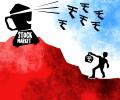
In the first eight months of 2019, 70 per cent stocks in the BSE 500 universe were down. These stocks account for 94 per cent of India's total market capitalisation.

At BSE, 1,799 scrips declined and 714 advanced, while 184 remained unchanged.

While this will incur a revenue loss amounting to 0.2 per cent of GDP, it will provide a strong boost to consumer sentiment and spending, points out Rajani Sinha.

Here stood a man who embodied the legacy of whatever Brand Tata stood for, embellished it, and departed into the long night, leaving the brand legacy for others to further enrich, notes R Gopalakrishnan.

Stock markets in India have become volatile. But there is still value to be chased. Here are 7 best picks for 2007.

Five of the 10 most valued firms added Rs 62,508.32 crore to their total market valuation last week, with Reliance Industries emerging as the biggest gainer. Hindustan Unilever Limited, HDFC, State Bank of India and Bharti Airtel were the other gainers while Tata Consultancy Services, HDFC Bank, Infosys, ICICI Bank and Bajaj Finance took a hit in their market valuation. The market capitalisation (mcap) of Reliance Industries jumped Rs 23,582.73 crore to reach Rs 15,37,600.23 crore at close on Thursday, becoming the biggest gainer among the top-10 firms.

The market capitalisation of Adani Group companies rose by nearly Rs 73,000 crore on Monday as investors lapped up shares of the power-to-port conglomerate after BJP's electoral wins in three states, spurring hopes of regime continuity at the Centre. The Gautam Adani group's market map once again neared the Rs 12-trillion mark, following sharp gains made over the past week. "Two big overhangs for the Adani Group have receded somewhat following the state election results, there is more certainty that the BJP will win a third time next year.
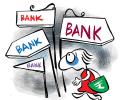
Bank credit growth is expected to moderate this financial year after a robust 16 per cent estimated for last financial year, driven by strong economic activity and retail credit demand. There are three reasons for this: a statistical high-base effect given the strong growth seen last financial year, revision in risk weights by the Reserve Bank of India (RBI), and relatively slower economic activity.
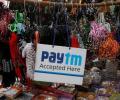
Paytm CEO Vijay Shekhar Sharma said on Wednesday that the company's share market performance has been in line with that of global peers in the sector over the past six months due to macroeconomic factors. "Macro factors like quantitative easing, free money due to US monetary policy and other parameters led to a spook in the market in terms of pricing the IPO. "Paytm's shares have received a similar response to that of global peers in the last six months...But that is not a complete reasoning.

Sure, a few listings like those of SKS Microfinance and Gujarat Pipavav have seen significant investor interest, but experts say it's too early to signal a primary market revival.
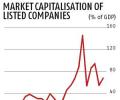
Forty years ago, the total market capitalisation of listed companies in the Indian stock market stood at a paltry seven per cent of gross domestic product (GDP). In 2012, the figure stood at 68 per cent.

More than 50 per cent of SIP accounts come from semi-urban and rural areas.

Among the Sensex firms, ICICI Bank and SBI led the index with the maximum gains of 4.68 per cent and 3.99 per cent, respectively. Other major gainers were Larsen & Toubro, Kotak Mahindra Bank and HDFC Bank. On the other hand, Wipro and Tata Motors defied the trend and traded in negative.

If you think that revenue officials are going berserk, acting on their own, while the government chants the mantra of 'ease of doing business', you would be wrong. These moves appear to have full official backing, points out Debashis Basu.

rediffGURU Ramalingam Kalirajan answers your personal finance queries.
According to the report, the market continues to hold promise as the economy is expected to grow above five per cent even in the global economic downturn.

'Arbitrage funds make the most sense for those in the 30 per cent tax bracket, are viable for those in the 20 per cent bracket, but less so for those in the 10 per cent bracket.'
India's first $1 trillion company by market capitalisation (mcap) is achievable by 2032 and HDFC Bank and Reliance Industries (RIL) are seen as lead contenders, ICICI Securities said in a note on Monday. To achieve this, the shares of both the firms will have to appreciate at least 20 per cent annually for the next decade. ICICI Securities believes this is possible if India's gross domestic product (GDP) growth accelerates to 9 per cent per annum and corporate profitability cycle peaks. "Our calculations suggest that India's first $1 trillion mcap stock could emerge by 2032.
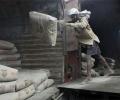
Shree Cement beats ACC in market value, Lupin ahead of Dr Reddy's Labs
'China is struggling to get out of its property bubble.' 'Japan took 35 years to walk out of its equity bubble.' 'Bubbles can be difficult to forecast.'
In rupee terms, market capitalisation inches closer to GDP.

One of the biggest advantages of index funds and ETFs is their low cost, points out Sarbajeet K Sen.
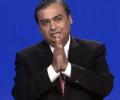
Reliance Industries Ltd on Thursday reported a 7.4 per cent rise in its December quarter net profit, as its retail business rebounded and telecom earnings rose. Its consolidated net profit of Rs 18,540 crore, or Rs 13.70 per share, in October-December - the third quarter of April 2024 to March 2025 fiscal (FY25) - compared to Rs 17,265 crore, or Rs 12.76 a share, in the same period a year back, according to a stock exchange filing by the company.

'Investors looking at the next 6-12 months can be certain that the Fed will maintain its easing cycle, and we expect the overall environment to be conducive for fixed income investments for portfolio diversification.'
Public sector banks (PSBs) have delivered significant outperformance over the past three years and the sector has been re-rated. Given the growth and profitability expectations of an 18 per cent return on equity (RoE) over FY24-26, there is still a case for buying at the current levels. While the net interest margins or NIMs may remain range-bound or have a downward bias, there's optimism about possibly better opex ratios and lower non-performing assets (NPAs), plus scope for further credit cost reduction, and healthy treasury performances as interest rates trend down.

Analysts say domestic banks' dependence on local depositors insulates them from the crisis.

Market benchmarks gave up intra-day gains to close in the red for the sixth session on the trot on Friday, capping a bruising week which saw a massive dash for safety amid rate hikes by global central banks and fears of slowing growth.

India Inc has reported a muted start to the financial year 2024-25, with a decline in net earnings and a modest single-digit uptick in revenues. An analysis of 488 companies that have released their results for the June 2024 quarter reveals a 1.6 per cent year-on-year (Y-o-Y) drop in combined net profit -- the weakest performance in the past seven quarters. In stark contrast, the combined net profit of these companies experienced a 13.6 per cent Y-o-Y increase in the previous quarter (Q4FY24) and a 65.2 per cent Y-o-Y rise in Q1FY24.
Four companies --TCS, Coal India, Wipro and Bharti Airtel -- saw decline in their market-cap.
In the last six trading days, the Sensex, BSE's benchmark index, has declined a record 3,222.10 points - from 20,827.45 to 17,605.35. The total market capitalisation of the actively-traded stocks fell by Rs 11,85,687 crore (Rs 11.85687 trillion) to Rs 59,53,526 crore (Rs 59.53526 trillion).

On the BSE, 2,243 scrips declined, while 224 advanced and 106 remained unchanged.

This is BSE Sensex's best weekly rise since October 31, 2014.
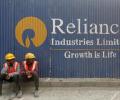
Shares of RIL on Monday opened at Rs 1,206.50, then gained further ground and touched its 52-week high level of Rs 1,238.05, up 2.87 per cent over its previous closing price.

The top 25 global technology (tech) firms, including Apple, Microsoft, Amazon, Tencent, Samsung, Oracle, and Accenture, collectively lost over $600 billion in market capitalisation (m-cap) during the July-September quarter (third quarter, or Q3) of calendar year 2023 (CY23), reveals a recent report by GlobalData, a London-based analytics and consulting company.

The total market capitalisation of BSE-listed companies had gained Rs 26.79 lakh crore to Rs 1,21,54,525 crore during 2016-17 fiscal.

To curb raw material imports from China and promote textiles, the Uttar Pradesh government is looking to set up nearly a dozen private textile parks in the state. The textile parks would be established under the UP Textile and Garmenting Policy 2022.
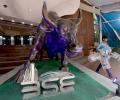
The Bombay Stock Exchange on Monday crossed the one trillion dollar milestone in terms of market capitalisation of all the companies listed on the bourse on the back of soaring share prices and an appreciating rupee.
